Pages

Tuesday, 15 January 2019

Summer Learning Journey - Day 4: More Than Meets the Eye

Activity 1: Scaling New Heights [4 points]
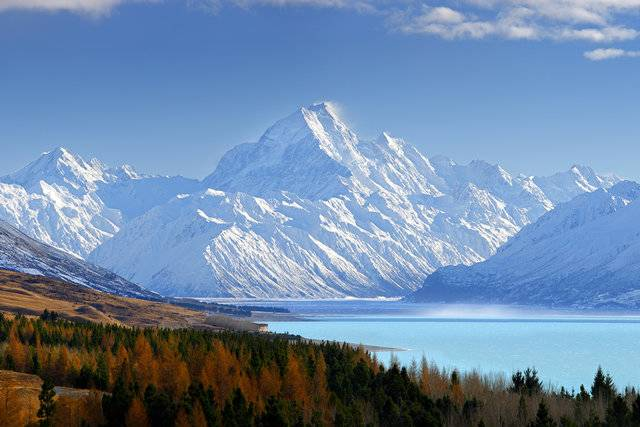
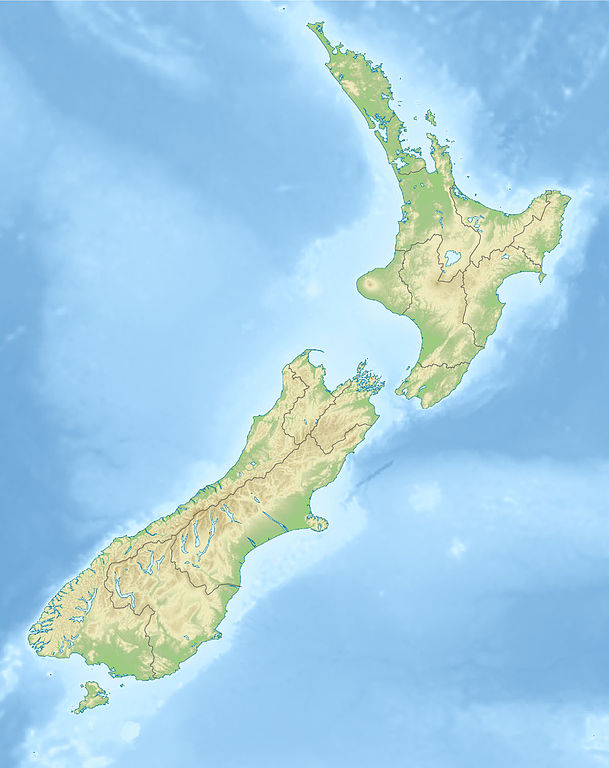
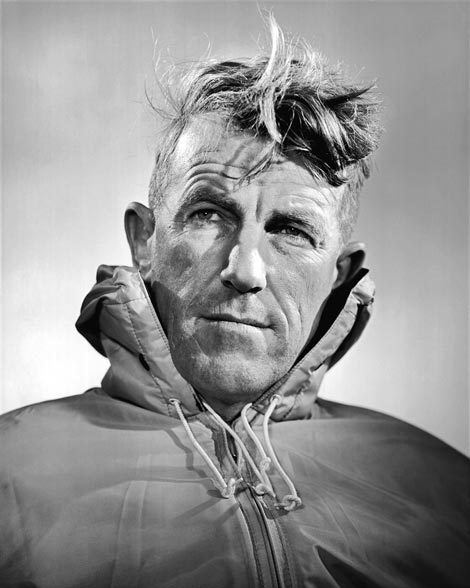
Aotearoa New Zealand is a country of mountains and valleys, dense forests, and sparkling oceans. At the centre of the South Island sits the tallest mountain in the country, Aoraki Mt Cook. It is the place where Sir Edmund Hillary, the first man to reach the top (summit) of Mt Everest, learned how to climb mountains. It was pretty difficult for him, at first, but Sir Edmund Hillary did not give up and, in 1953, he achieved this dream of climbing Mt Everest. His face can now be found on the New Zealand $5 note!
Let’s imagine that you met Sir Edmund Hillary in real life and were able to interview him.
On your blog, post five questions that you would like to ask Sir Edmund Hillary about his life.

What made you want to climb mountains in the first place?
How does it feel to be the first man ever to reach the top of Mt. Everest?
How did your family react when you told them you were going to climb Mt. Everest?
While you were climbing, did you ever feel like giving up?
How did you feel when you reached the top of Mt. Everest?

Activity 2: Pancakes and Maple Syrup? [4 points]
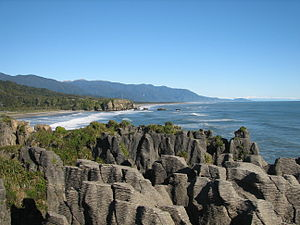
Aotearoa New Zealand is home to many spectacular sights and natural wonders. One of these is the Punakaiki Rocks and Blowholes located on the West Coast of the South Island. The Punakaiki rocks attract tourists from all over the world who are keen to see these amazing rock formations. Many people think that they look like pancakes stacked on top of one another. Pancakes are one of my favourite foods! They are delicious and pretty easy to make.
For this activity you are asked to choose one of your favourite foods. On your blog, write the name of your favourite food and then tell us how to make it. You may need to ask a family member, friend or Google (!) for help, if you do not normally make this food for yourself.

Cheese Toasties
First you have to get two slices of bread and butter it.
Then you add cheese on the side that doesn't have butter. (You can add other things like ham)
You then pop it into your Sandwich toaster.
ENJOY!
Activity 3: Salt and Pepper [5 + 5 possible bonus points]
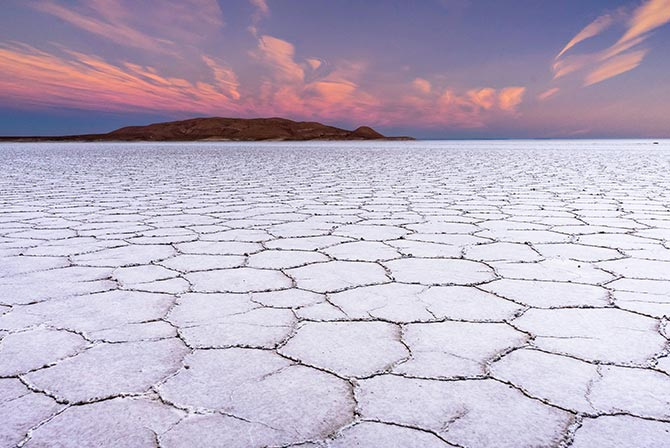
Deep in the heart of Bolivia (a country in South America) lies a natural wonder unlike anything else. It is a massive area of salt, over 10 000 km2 large, that is referred to as the Uyuni Salt Flats.
Tourists who visit the flats often stay in hotels made completely out of salt (salt hotels). This is not the only unique hotel that you will find around the world. In fact, you can stay in hotels made entirely of ice (ice hotels) or glass (glass hotel). Let’s imagine that you were given enough money to build your very own hotel.

On your blog tell us where you would build your hotel and what you would use to build it. For an extra five points, use Google Drawings to design one room in your hotel. You can also use a paper and pencil to draw your room, take a picture of the drawing, and post it on your blog.
I would build my hotel in Bora Bora and make it out of Bamboo. 

*CLICK ON IMAGE TO GET A CLOSER LOOK

Summer Learning Journey - Day 3: Awesome Animals

Activity 1: Fantastic Beasts [4 points]

In New Zealand we have many unusual animals. One of the most unusual is the kiwi bird - a bird that does not have wings and can not fly. Pretty strange, eh?! J.K. Rowling, the author of the Harry Potter books, has recently written a new book about strange or unusual animals called ‘Fantastic Beasts and Where to Find Them.’
For this activity, please watch this cool book trailer. Year 7 and Year 8 students in South Auckland, New Zealand helped to make it. Once you have watched the video, use your imagination and create your very own beast. What does your beast look, smell, feel, and sound like?
On your blog, post a description of your beast. Use interesting adjectives (describing words) to tell us about your beast.

My beast is about the same size as a Armadillo, it's nose is like an elephant. It's body is very furry like a cat. It smells like wet grass. It makes a loud noise to scare off other animals.

Activity 2: The Secretive Skink [4 points]
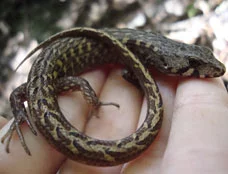
We have a number of small lizards (geckos and skinks) living in New Zealand. One of the least common is the Chevron Skink. According to the Department of Conservation, Chevron Skinks live mostly on two islands - Great Barrier Island and Little Barrier Island. These islands are ‘animal reserves.’ Very few people, other than staff working for the New Zealand Department of Conservation (DOC), are allowed to live there. The DOC staff are called ‘Rangers.’ Their job is to protect the wildlife (animals and plants) living on the island.
Would you like to be a DOC ranger and live with the animals on Great Barrier Island?
On your blog list three pros (good things) and three cons (bad things) about working as a DOC ranger. At the bottom of your post, tell us whether you would like to be a DOC Ranger or not.
Three Pros
* You get to go to an island many people cannot. 
* You get to live with different kinds of animals.
* You can learn about more about the animals there. 

Three Cons
* You are away from your family.
* The animals there might harm you.
* You might feel lonely and isolated.

Activity 3: The WWF: World Wildlife Fund [10 points]
In 1961, a number of people came together to start an organisation called the World Wildlife Fund (WWF). The main goal of this organisation was/is to protect life on earth. Hundreds of WWF staff work in countries all over the world trying to protect our planet and the animals who live here, including the Maui Dolphin. At present there are only 63 Maui Dolphins left in the world and the WWF is asking for our help to protect them. They have created a petition that everyone in New Zealand is invited to sign. If you would like to sign the petition to save them, please follow this link.
For this activity, we would like you to learn more about other work that is done by the World Wildlife Fund to save endangered animals. Please click on one of the two links below and watch the short video.
Clip #2: Tigers
Once you have watched the video, go to your blog and, using full sentences, tell us:
1) The name of the animal the WWF is working to save.
2) What the WWF is doing to help the animal.

3) What, if any, success they have had protecting the animal.

1) WWF is trying to save The Saima ringed Seal.
2) WWF is building snow banks for the seal's pups so they aren't vulnerable to any dangers.
3) From the video, it does not say anything about how many seals they have saved yet. 

Summer Learning Journey - Day 2: Forest Life

Activity 1: Giants Among Us [4 points]

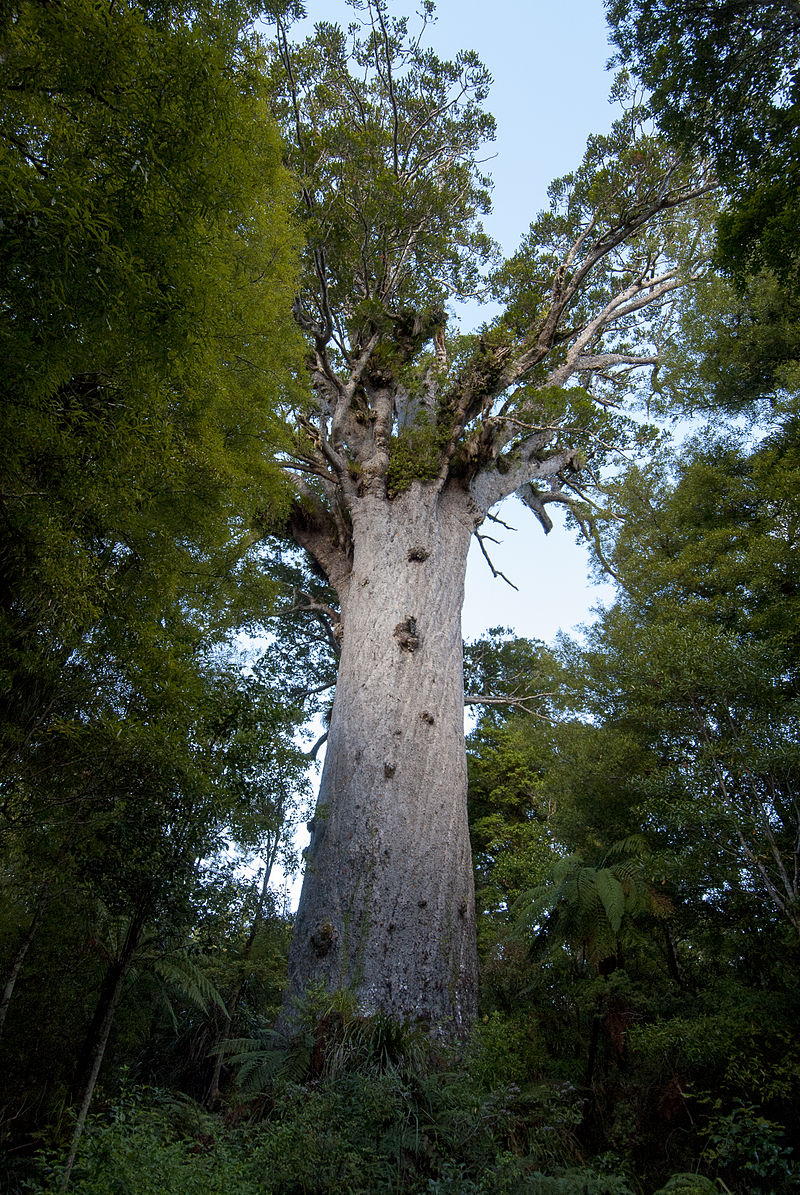
New Zealand has a really special environment. Many of the plants and trees found in New Zealand are not found anywhere else in the world. These plants and trees are endemic to our country.  In New Zealand, one of the largest and longest living endemic trees is the NZ Kauri tree. Kauri are mainly found in three regions of New Zealand: the Coromandel, Auckland and Northland. The largest Kauri tree in the country is in the Waipoua Forest in Northland. It is called Tāne Mahuta. Some people refer to it as the ‘Lord of the Forest.’
Thousands of people go to visit Tāne Mahuta every year. Would you like to be one of those people who got to see Tāne Mahuta in real life? Why or why not?
On your blog, tell us whether you would like to go and visit Tāne Mahuta one day. Be sure to tell us why you do (or do not) want to visit this endemic tree.

I would like to see Tane Mahuta because it's quite popular in New Zealand and I think it would be pretty cool to be one of those people who got to see the tallest Kauri Tree.

Activity 2: Fabulous Ferns [4 points]

One of the most common plants found in New Zealand forests is the fern. It is a special, iconic symbol of New Zealand. You will find pictures of ferns on the jerseys of many famous sporting teams in New Zealand, including the New Zealand All Blacks.
Did you know that many of these teams also have the word ‘fern’ in their name? Use your best researching skills to find three New Zealand sporting teams who use the word ‘fern’ in their title.
On your blog list three sports teams that have the word ‘fern’ in their title. Beside each team’s name, post a picture of their uniform. Then, at the bottom of your blog post tell us which of the three uniforms you like best and why.
Image result for silver ferns netball
SILVER FERNS - I like this one the least because I feel like wearing a dress while playing a sport is very annoying, especially when jumping. Rating: 3
Image result for black ferns
BLACK FERNS - I like this one the most because I really like the design and wearing shorts and a t-shirt is very convenient when playing a tough sport. Rating: 1
Image result for tall ferns
TALL BLACKS - I really liked this one but I just thought the design wasn't very interesting. Rating: 2

Activity 3: Weird and Wonderful [10 points]
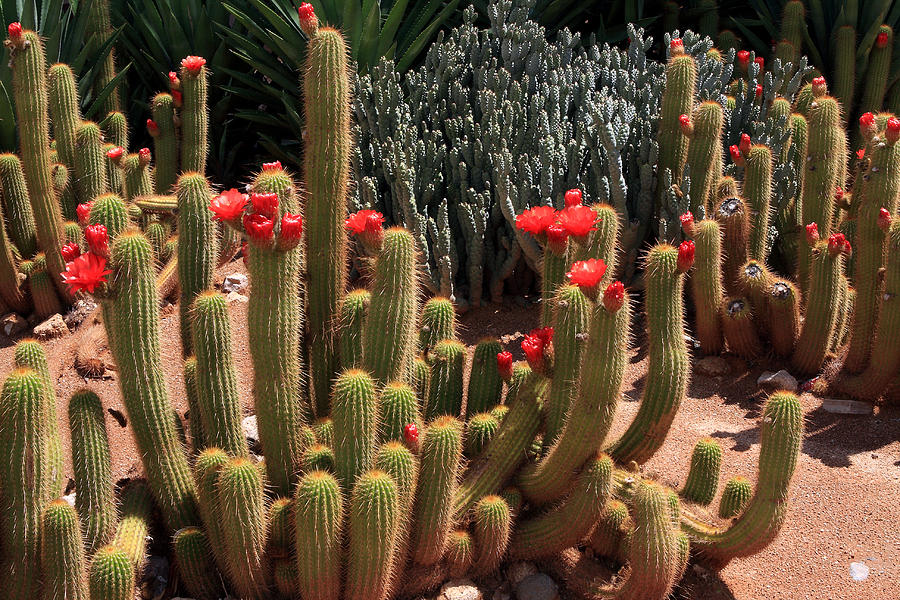
New Zealand is just one of many countries that has amazing plants and trees. In fact, the African desert is home to some pretty incredible plants, like the cactus. Some cacti are able to survive on as little as 3 millilitres (ml) of water a day. Wow!
Let’s imagine that you are given a cactus for your birthday. To keep it alive, you must give it 3 ml of water every day.
Over one full year, how much water will you need to give your cactus plant?
On your blog, tell us how to solve this maths problem. You can write your answer in words, use a Sketchpad image, or post a video explaining how you would figure it out. Be sure to give us your final answer in millilitres (ml).


3ml x 7 = 21ml (7 days)
52 weeks x 21 = 1092mls
= 1.92 Litres of water = 1920ml

Summer Learning Journey - Day 1: In the Beginning ...

DAY 1: In the Beginning...

Activity 1: The Legend of New Zealand [4 points]

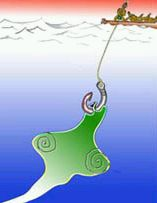
According to Māori mythology, much of Aotearoa New Zealand was formed when Māui, a powerful demigod, fished it out of the sea. Legend has it that Māui created a magical fish hook from the jawbone of his grandmother and that one day he took his hook, boarded a boat, and rode out into the middle of the Pacific Ocean. Once at sea, he threw his magical hook into the water and caught a fish. This ‘fish’ was actually the North Island of New Zealand! In honour of this legend, the North Island of New Zealand is sometimes referred to as Te Ika a Māui or ‘Māui’s fish’ and the South Island of New Zealand is sometimes referred to as Te Waka a Māui or ‘Māui’s canoe’.
To learn more cool facts about New Zealand, check out the Tourism NZ website. Read the fun facts posted on the website and choose your ‘Top 3.’ On your blog, post your ‘Top 3 Fun Facts’ about NZ in your own words.

'Top 3 Fun Facts'
* If you want to become a New Zealand citizen, you have to swear an oath of loyalty to Queen Elizabeth 
* New Zealand is the first nation to let both male and females vote.
* The Sky Tower is the tallest building in the Southern Hemisphere. 

Activity 2: North and South [4 points]
The country of New Zealand is made up of two main islands – the North Island and the South Island. Approximately 77% of the New Zealand population live in the North Island. Many of these people (including our Summer Learning Journey design team) live in Auckland city. Auckland is a great place to live with lots of amazing parks, beautiful waterways and stunning scenery to enjoy. It is also a busy, vibrant city with many cafes, museums, galleries and theatres to visit. I feel lucky to call Auckland my ‘hometown.’
Now it is time to think about your hometown. What is special about where you live? On your blog, describe your hometown. Be sure to include lots of describing words (adjectives) in your post.

My Home Town - Auckland
I love living in Auckland. I love going to town and seeing movies on the big screen, eating at various restaurants and shopping at our awesome malls. But there is also another side to Auckland. The stunning beaches are perfect for a day out and you can always go to Auckland Zoo to see the wonderful animals. Auckland is a very exciting place and there is always something to do.

Activity 3: Ice, Ice Baby [10 points]
Antarctica is the world’s coldest continent. Even though it is made up of ice, it is also the driest continent in the world. In fact, it hasn’t rained there for nearly 2 million years! It is home to many animals such as whales, seals, birds, and fish. There are no permanent human residents (people who live there all the time) in Antarctica, however scientists do visit and stay in Antarctica for a while to study it.

This year the airline, Air New Zealand, filmed their safety video in Antarctica. They used some fabulous actors from Hornby Primary School in Christchurch. Just like on aeroplanes, we also need to keep safe and be smart online. We need to think about the type of information we are sharing online, who we are sharing information with, and how to have a positive digital footprint.

On your blog, make a copy of this footprint and, inside the footprint, explain how you create a positive, digital footprint. What do you do to stay smart online?.


*CLICK ON FOOTPRINT TO GET A CLOSER LOOK

Friday, 14 December 2018

End of Year Post

Today is my last day as a Year 7. Below are some memories of this year. 


Thursday, 6 December 2018

Advent & Lent Venn Diagram

Learn: I learnt about the differences and similarities between Lent & Advent.


Wednesday, 5 December 2018

Ruth 1:1-19

Summary of Ruth 1:1-19
Working w/ Helena

A man named Elimelech lived in Bethlehem with his wife, Naomi and sons. Together they move to Moabz. The sons marry. Elimelech and his two sons die, leaving Naomi with her two daughter-in-laws.
Naomi moves back to Bethlehem but tells her daughter-in-laws to return to their parents. Orpah leaves but Ruth stays with Naomi and Naomi is grateful.