Pages

Thursday, 21 December 2017

Summer Learning Journey | Week 2 Completed

A Period of Change (1870 - 1950)
Day 5 - Coming to an end

Activity 1 | VE Day!

After six long years of fighting, World War II finally came to an end in 1945. The entire country was ecstatic and parties were thrown all over New Zealand to celebrate VE Day (Victory in Europe). Imagine that you were living in New Zealand in 1945 and you had to plan a VE day party at your house. Who would you invite? What would you do to celebrate?

On your blog, tell us all about your (imaginary) VE party. If it was me, I would invite all of my closest friends and family over to my house for a big barbecue. We would eat hamburgers and play basketball in the driveway. Some of us would probably walk to the local beach to play soccer on the beach and to go for a swim (if the weather was warm enough)!

VE Party | Planning

> Invite all my close friends and family

> Go to the beach to have a bbq

> Play beach games like: Frisbee & Vollyball

> Eat Ice cream and have cold drinks


Activity 2 | Making a Fashion Statement 

Image result for 2017 clothing style winter
2017
Late 1940's
In the years following World War II, things slowly returned to normal in New Zealand. Soldiers returned home and settled back into regular life; and national sporting teams, like the New Zealand cricket team, got back together and started playing matches again. In the late 1940s, men and women would go to watch these events, men wearing hats and suits and women wearing dresses, hats, and gloves.
Compare the pictures of common clothing from the late 1940s to what you wear now (i.e. in 2017). Are they similar or are they quite different?

On your blog tell us which of the two styles you prefer and why. The pictures above were taken over 65 years ago! What do you think people will be wearing 65 years from now?


Late 1940's & 2017 | My Opion

To be honest, I would prefer the modern style. If I lived in the 1940's, I think I would of enjoyed the fashion trends and clothing, but I live in 2017, where fashion sense is totally different then before. 


Bonus Activity | Sweet Tooth

When World War II ended, a number of people from Europe moved to New Zealand looking for a peaceful place to live and raise a family. When they came, they brought recipes and foods from their native countries with them, including hamburgers, pizza and other delicious foods.

I usually have a chocolate chip cookie with my tea. I love biscuits! What is your favourite sweet treat or dessert? Use google to find a recipe for it. Type the recipe out on your blog. Make sure you also include a picture.

Perfect Pavlova | Recipe + Picture

Ingredients

6 egg whites (at room temperature)
2 cups Chelsea Caster Sugar
1 tsp vanilla essence
1 tsp white vinegar
2 tsp cornflour
300ml cream, whipped
Fruit for decoration


Pre-heat oven to 110ÂșC bake (not fan bake).
Line a baking tray with baking paper.
In a large metal, ceramic or glass bowl (not plastic), beat the egg whites until soft peaks form.


Continue beating while adding the sugar a quarter of a cup at a time. The mixture should get glossier and thicker with each addition and this should take at least 10 minutes. Beat in the vanilla, vinegar and cornflour.

Spoon mixture out onto the prepared tray into a dinner plate sized mound.
Bake for approximately 1 1/2 hours, until dry and crisp and it lifts easily off the baking paper. Turn the oven off and leave the pavlova for at least an hour before removing from the oven. Finish cooling on a wire rack. 
When completely cool, place on a serving plate, swirl the top with the whipped cream and decorate with sliced or chopped fruit of your choice.

Summer Learning Journey } Week 2

A period of Change (1870 - 1950)
Day 4 - Another World War (1939 - 1945)

At the end of the 1930s, the world has been shaken once more by the start of another World War (WWII). World War Two started on the 1st of September, 1939 when an army from Germany invaded a country called Poland. Two days later, England and France declared war on Germany and WWII began.

Activity 1 | An Eventful Experience 

WWII was made up of many battles and events. Follow this link to read more about the timeline of WWII.

Choose two key events and find out some more information about what happened on those days. On your blog, write a short summary of two events, including the names of people involved and where the event happened.

Timeline of WWII | Summary

> New Zealand declares war on Germany | 3 September 1939
Alongside Britain and Australia, New Zealand was one of the first countries to declare war on Germany after their attack in Poland.

> Evacuation at Dunkirk begins | 26 May 1940
The Dunkirk evacuation moved about 340,000 British, French and Belgian (allied) soldiers from Dunkirk to England.


Activity 2 | A Call to arms

Over the course of WWII, approximately 140,000 New Zealanders were sent overseas to serve in the war. Many were sent to fight in huge battles, including the Battle of the Atlantic that lasted for 2064 days (over 5 years)! The Battle of the Atlantic came to an end in 1943, in large part due to the heroic efforts of people like Lloyd Trigg, a pilot from New Zealand. He was awarded a special medal from the New Zealand Government for his bravery. It is called a Victoria Cross (‘VC’ for short). A total of 22 New Zealanders have been awarded VCs.

Click on this link to find a list of VC winners. Choose one from the Second World War, and read about him. On your blog tell us about him. Who was he? What did he do to earn a Victoria Cross medal?

Te Moananui-a-Kiwa Ngarimu

Te Moananui was the first Maori soldier to win a VC. His job was to knock out machine gun posts and to capture the crest. He was shot in the arm and leg but didn't leave his position. He died the next morning and his VC was given to his parents on 06 October 1943.


Bonus Activity | Women at Work

Both men and women served in World War II. Many women chose to enlist as nurses and be stationed overseas caring for wounded soldiers. My nana was one of those nurses. She (Dorothy) spent much of World War II working on a large Red Cross ship that was stationed off the coast of Cairo, Egypt.   

For this activity, you are going to imagine that you are just like Dorothy and that you are working as a nurse on a large medical ship.

One day you are walking along the deck of the ship when you hear a loud bang. You start to run as you see smoke coming from the far end of the ship. You run towards the room where your patients are waiting to receive treatment from the doctor. Just as you arrive at the door to their room you hear another loud bang and you…

Complete the story provided above. To earn full points you must write, at least, 8-10 sentences. What happens next?

Just as you arrive at the door to their room you hear another loud bang and you start running to all the patients in the room "Bang!" I start to help wounded soldiers walk out of the room, they are limping so I put their arm over me and walk with them outside the room. "Bang!" I start to panic, will everyone get to safety? Where are the doctors? "Hey! What's going on?" "Bang!"

"Doctor!" I shout. He straight away knows what's happening and quickly grabs anyone who is still inside the room. "Bang!" Everyone around me are trembling with fear and breathing heavily. We wait till the next noise. Nothing. Everyone gets up. No one's hurt.
Everyone's Okay, what a relief.


Summer Learning Journey | Week 2

A Period of Change (1870 - 1950)
Day 3 - The Great Depression (1930's)

Unfortunately, the wealth and success of the 1920s did not continue into the 1930s. Instead, the stock market in America crashed on Tuesday 29 October 1929. When this happened, people lost a lot of money and much of the world sunk into a deep, financial depression. The 1930s is often referred to as the ‘Great Depression.’

Activity 1 | Dealing with Stress

In New Zealand, many people lost their jobs during this decade. Experts predict that as much as 30% of the population was unemployed. It was a very stressful time for families.

Sadly, many of us still experience stress in our lives to this day. When I feel stressed I try to go for a walk or pop into my local gym for a quick workout. Exercise makes me feel better. What about you?

On your blog, please tell us what you do when you want to relax or de-stress. Do you read a favourite book, watch a favourite television show or talk to someone special?  What are your tips for dealing with stress?

Tips | Dealing with Stress

What I like to do when I want to relax is:

> Sit outside (take a deep breath)

> Going for a walk

> Having a cold drink (In Summer) Hot drink (In Winter)

Activity 2 | Offering a Helping Hand

During this period, people struggled to find work both here at home and overseas. It was a really tough time for people living in the Great Plains of the United States because they were hit with a huge drought that lasted for most of the decade. Many crops were damaged and farmers were not able to make enough money to feed their families.

Imagine that you were alive in the 1930s. What could you have done to help these families? On your blog, list three different ways that you could raise funds for families to help them buy food and clothing. Be as creative as you can with your fundraising ideas!

Fundraising for Families | 1930's

What could I do to help?

> Maybe I could bake some cakes/cupcakes.

> Sell some old/unwanted clothes.

> Ask rich homes to help support poor families.


Bonus Activity | Paying it forward

In the mid-1930s, things began to change for the better in New Zealand. More people were able to find work and receive a steady paycheck. They were still careful, however, with their money and rarely, if ever, bought treats or gifts for one another.

Imagine that you were able to travel back in time to visit a family in the 1930s. What special gifts or treats would you like to bring with you? I would likely bring blocks of Whittaker’s chocolate, bags of Jet Planes and Pineapple Lumps, healthy food snacks, clothing, and games for the children. What about you?

What would I bring? | 1930's

I would bring things like:

> Anzac Biscuits

> Bikes, Skateboards, roller skates for the kids

> Whittaker's Chocolate, Pavlova and L&P


Summer Learning Journey | Week 2

A Period of Change (1870 - 1950)
Day 2 - The Roaring 20's (The 1920's)

Activity 1 | Popular Culture - The Silent Movie

The 1920s saw a massive surge in the number of people going to the movies. Huge new cinemas were built in both Auckland (The Civic Theatre) and Dunedin (Empire De Luxe).  The most popular type of movies showing at local NZ cinemas were ‘silent’ films. Gold Rush is an example of an iconic silent film. It features a famous actor named Charlie Chaplin.

Watch the trailer for Gold Rush. On your blog, tell us what you think the movie is about. There are no words spoken movie so you will need to pay careful attention to what the actors are doing! Do you think you would enjoy watching a silent film? Why/Why not?

The Gold Rush | Charlie Chaplin

I think this movie is about four different people in search for Gold.
To be honest, I wouldn't necessarily watch Silent movies, but this movie looked very funny, so I'll make a exception.

Activity 2 | Art Deco


In the 1920s a new artistic movement emerged in New Zealand (and around the world). It was called ‘Art Deco.’ The picture to the right is a classic example of an ‘Art Deco’ piece. Take a close look at the painting. Do you like it?

On your blog, give the painting a rating out of 5 stars (1 star = terrible painting, 2 stars = pretty bad painting, 3 stars = okay painting, 4 stars = good painting and 5 stars = amazing painting). After you’ve rated the painting out of 5, tell us why you gave it that rating.

Right: Self Portrait By Tamara de Lempicka

My Ranking: 5/5

I think this painting is very creative and beautiful. I love the shading and highlighting which makes the painting look even more realistic.

Bonus Activity | Crossing the Tasman

In 1928, a crew of four men flew, for the first time, across the Tasman from Australia to New Zealand. One of the men on board the Southern Cross airplane was a New Zealander named T.H. McWilliams. His job was to operate the radio in the airplane. Unfortunately, the radio stopped working shortly after take-off and the rain and ice were so heavy that the pilot, Kingsford Smith, couldn’t see out of his front windscreen. Yikes! Fortunately, the plane made it all the way across the Tasman landing in Christchurch after a 14 hour trip.

Imagine that you were a member of the flight crew. Write a poem that describes how you would have felt when you landed safely in Christchurch after such a long trip. Remember, there are lots of different types of poems, and they don’t all have to rhyme. You can read more about different types of poems by clicking here.

My Poem | Across the Tasman

F Frightened
L Light Headed
I Impaitent
G Grumpy from the long ride
H Happy to finally land
T Tired


Wednesday, 20 December 2017

Summer Learning Journey | Week 2

A Period of Change (1870 - 1950)
Day 1 - The Early Years


Activity 1 | St Joseph’s Cathedral

At the turn of the century, there was a great deal of construction happening in New Zealand. Many of the new British settlers wanted to build homes and community meeting places, such as churches. One of the largest buildings to be constructed during this period was St Joseph’s Cathedral in Dunedin.

St Joseph’s Cathedral is just one of hundreds of beautiful cathedrals around the world.

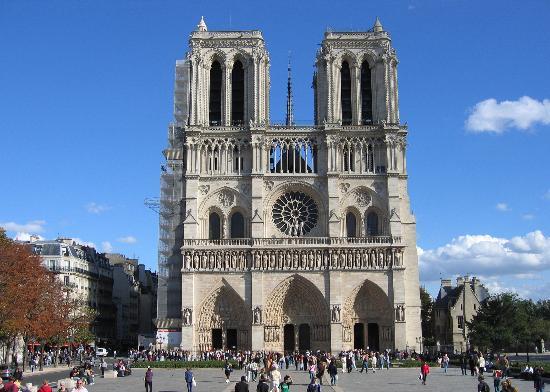
Use your search engine to find a picture of another famous cathedral. Post a picture of the cathedral on your blog. Underneath the picture tell us: the name of the cathedral, where the cathedral is located, when it was built, and how long it took to build

Famous Cathedrals | Facts

Image result for Notre Dame

Name: Notre Dame Cathedral
Located: Paris, France
Built: 1163
How many years did it take to build: 200 Years

Activity 2 | The Right to Vote

At the turn of the century, New Zealand elected its first ever government. Richard John Seddon served as the leader of the Liberal Party from 1893-1906. Prior to 1893, only men were legally allowed to vote. This all changed in the late 1800s when a woman named Kate Sheppard lead a suffragist movement in New Zealand calling for a change in law. Her hard work finally paid off when the Electoral Act was passed into law on 19 September 1893, giving women the right to vote. New Zealand was the first country to give all women the right to vote. There were still countries in the world (e.g. Saudi Arabia) who, until recently, did not allow women to vote.

On your blog tell us what you think about the fact that women were not allowed to vote in Saudi Arabia until 2015. Is it fair? Why or why not?

My Thoughts | Saudi Arabia

I think it was not fair for women to wait that long just to vote, it's just nonsense. Women should be able to vote because their opinions count too, not just males. But they did let women vote eventually which I think was the right choice.

Bonus Activity: In Flanders Fields

As the new century dawned, New Zealanders settled into a period of relative calm. The calm lasted for about 15 years but came to a sudden end in 1914 when World War I erupted in Europe. The war lasted for almost five years and claimed the lives of 18,000 New Zealanders.

It also claimed the lives of thousands of men and women from countries around the world. Every year, we remember these brave men and women on ANZAC Day (25 April). Many people go to a special Anzac Day ceremony where they read a special poem that was written for the fallen soldiers. The poem is called ‘In Flanders Fields’ by John McCrae.

Read the poem. On your blog, tell us what you think of the poem. Do you like it? How does it make you feel?

It makes me feel very lucky to live in a beautiful, safe country like New Zealand. It also makes me feel sad for those who died in the war and for their families. I think that we are very lucky that they went to war and fought for our freedom. What do you think?

How did it make me feel? | In Flanders Fields

I thought the Poem was heart touching, and I could visualise the crosses and poppies sprouting in the ground. It made me think about the people who fought for our country and their families, and the pain they felt. It also made me think about how strong our country actually is.